
Vikram Kumar
Dr Vikram Kumar, Delhi State Awardee – Best Teacher Educator, 2021 possesses PhD in Education and a Master’s degree in Education and Fine Art. The Honorary Doctorate for Scientific Attitude in Education has also been given to him. He has written a number of books in his field of expertise, including ones on CETAS, Folk Art, and Art Education.
He is very interested in the topic of art education and hopes that education can help make different art forms more widely known. He has worked significantly on publishing content including publications like Folk Arts, Art Integrated Learning on Puppetry, Paper Craft, etc. Additionally, he contributed to the Training Package on Art Integrated Learning that NCERT, New Delhi, produced.
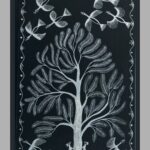
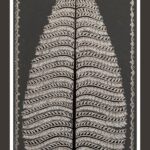
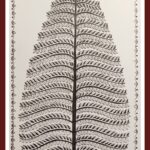
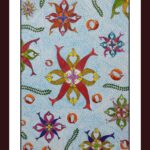
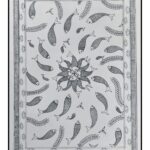
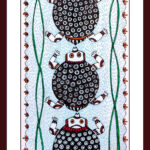
According to him, art is a trip where one can learn life’s lessons and the language of the mind. He had numerous memorable experiences from his days as a friend artist, and these recollections have always inspired him to work on and improve his painting. He paints several folk art forms as they have captivated him since he was a young child, including Madhubani, Manjusha, Warli, Pithora, and Bhil. Additionally, he fuses many creative styles, giving spectators a singular experience. The way in which ideas and practises evolve over the course of an artist’s artistic journey inspires him. Additionally, he is still on a quest to learn fresh ways to include art into everyone’s lives through education.
He believes that art is a journey and a language for the intellect..
Latest Art Work
-
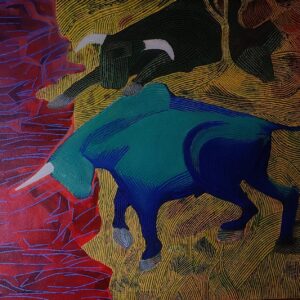
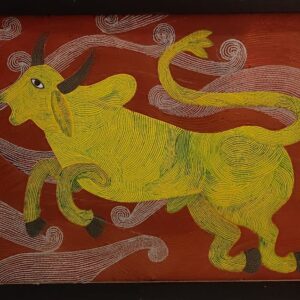
Holy Bull
₹45,000.00 -
A rush for life
₹80,000.00 -
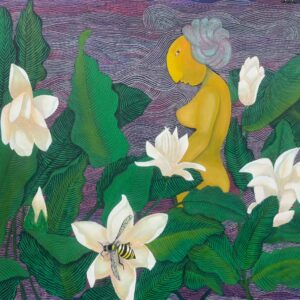
The Bloom Within
₹125,000.00 -
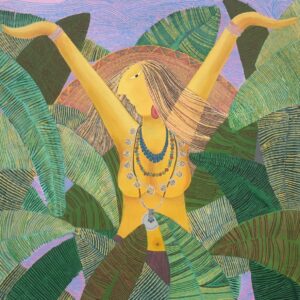
Embrace of Silence
₹125,000.00 -
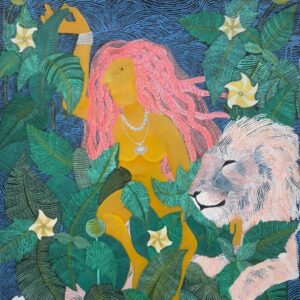
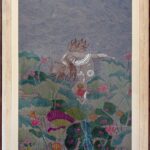
Lady with Lion
₹125,000.00 -
Whispers of the night
₹125,000.00
-
Love - V
₹45,000.00 -
Love - IV
₹45,000.00 -
Love - III
₹45,000.00 -
Love - II
₹45,000.00 -
Love - I
₹45,000.00
-
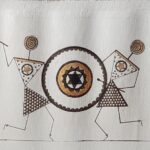
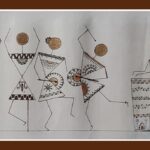
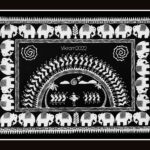
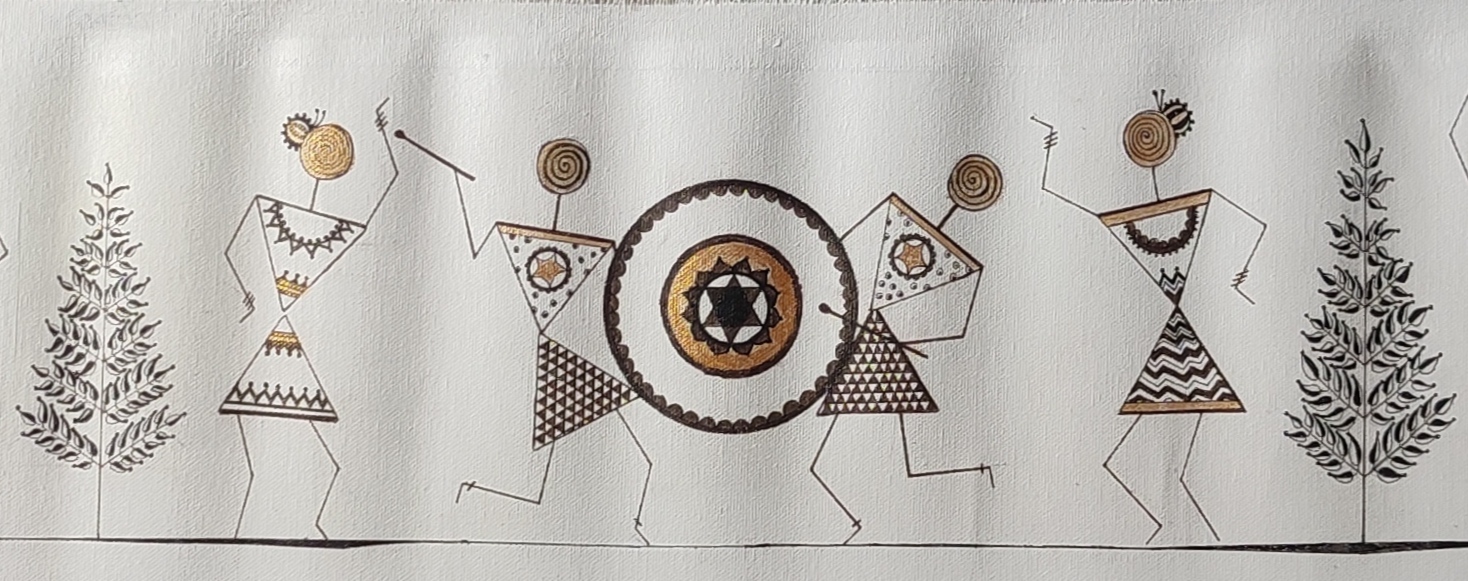
Warli-7
₹3,000.00 -
Warli-6
₹3,000.00 -
Warli-5
₹3,000.00 -
Warli-4
₹3,000.00 -
Warli-3
₹3,000.00 -
Warli-2
₹3,000.00
-
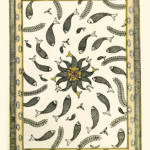
Saura-2
₹5,000.00 -
Saura-1
₹5,000.00 -
Madhubani-4
₹5,000.00 -
Madhubani-3
₹5,000.00 -
Madhubani-2
₹5,000.00 -
Madhubani-1
₹2,500.00
In Verdant Flow, Dr. Vikram Kumar presents a contemplative body of paintings that transforms foliage into a site of sustained visual and philosophical inquiry. Moving away from the ornamental conventions of botanical imagery, these works focus not on flowers or spectacle, but on the silent architecture of vegetal life—the persistence of leaves, the density of undergrowth, and the rhythmic structures through which nature continually regenerates itself. Across the exhibition, foliage emerges simultaneously as subject, atmosphere, and metaphor, inviting viewers into an immersive meditation on perception, memory, and ecological coexistence.
Dr. Kumar’s practice occupies a distinctive position between pedagogy and artistic production. A recipient of the 2021 Delhi State Award for Best Teacher Educator, his scholarly engagement with art education, minority studies, and inclusive learning informs the intellectual depth of his visual language. He is a prolific author, having written numerous books that explore the nuances of folk art and the complexities of art education. Holding advanced degrees in Education and Science alongside a doctoral specialization in Education, Kumar approaches painting not simply as aesthetic production but as a mode of reflective inquiry. His sustained involvement with art education initiatives, including his role in organizing the Rang-Tarang series (a mega art festival blending art and art education) under SCERT Delhi, reveals an enduring commitment to the relationship between creativity, cultural memory, and public learning.
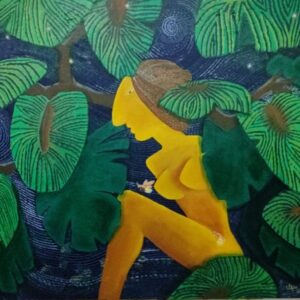
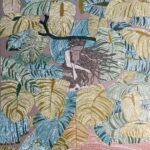
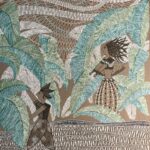
Nature has historically functioned within art as a symbol of beauty, fertility, or transcendence. Yet Kumar’s paintings resist the romanticization often associated with landscape traditions. In these works, flowers are conspicuously absent. This omission redirects attention toward what is usually overlooked: the supporting structure of vegetal existence. Banana leaves, plumeria foliage, palm forms, and dense tropical undergrowth dominate the pictorial field with remarkable intensity. Leaves no longer operate as decorative background elements but become carriers of rhythm, movement, and emotion. Through this shift in focus, Kumar privileges endurance over ephemerality and structure over bloom.
The paintings oscillate between representation and abstraction through layered and repetitive brushwork. Rather than producing descriptive botanical imagery, Kumar develops textured surfaces rooted in accumulation and rhythm. Repeated marks evoke woven textiles, topographical tracings, and the patterned density of miniature painting traditions. This repetitive process slows the act of viewing, encouraging prolonged attention and contemplation. The meditative quality of the works also recalls aspects of Indian folk and tribal visual traditions, where repetition often carries ritualistic and mnemonic significance.
At moments, the paintings evoke distant resonances with the constructed jungle environments of Henri Rousseau or the chromatic intensity of Paul Gauguin’s tropical landscapes. Yet Kumar departs from these precedents by refusing spectacle or exoticism. The tropical here is intimate rather than theatrical. Nature is not romanticized as fantasy; instead, it is presented as a living structure shaped by repetition, coexistence, and quiet persistence.
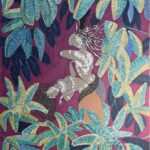
Color assumes a deeply psychological role throughout the exhibition. Saturated reds, dusky violets, ochres, deep greens, and muted blues create shifting emotional atmospheres that move between vibrancy and introspection. In several works, foliage appears suspended against luminous monochromatic grounds that flatten spatial depth and emphasize silhouette and rhythm. Elsewhere, densely layered leaves form almost impenetrable environments, evoking both shelter and entanglement. These are not literal landscapes but emotional and perceptual spaces where external ecology merges with interior states of feeling.
The exhibition’s varied formats further reinforce this interplay between intimacy and immersion. Smaller square works function like concentrated studies, isolating fragments of leaves until scale becomes ambiguous and form approaches abstraction. In contrast, the larger canvases unfold as immersive environments where overlapping foliage generates a sense of visual cadence. Titles such as Symphony of Leaves become especially resonant in this context, suggesting that each leaf functions like an individual note within a larger orchestration of texture, movement, and color.